 |
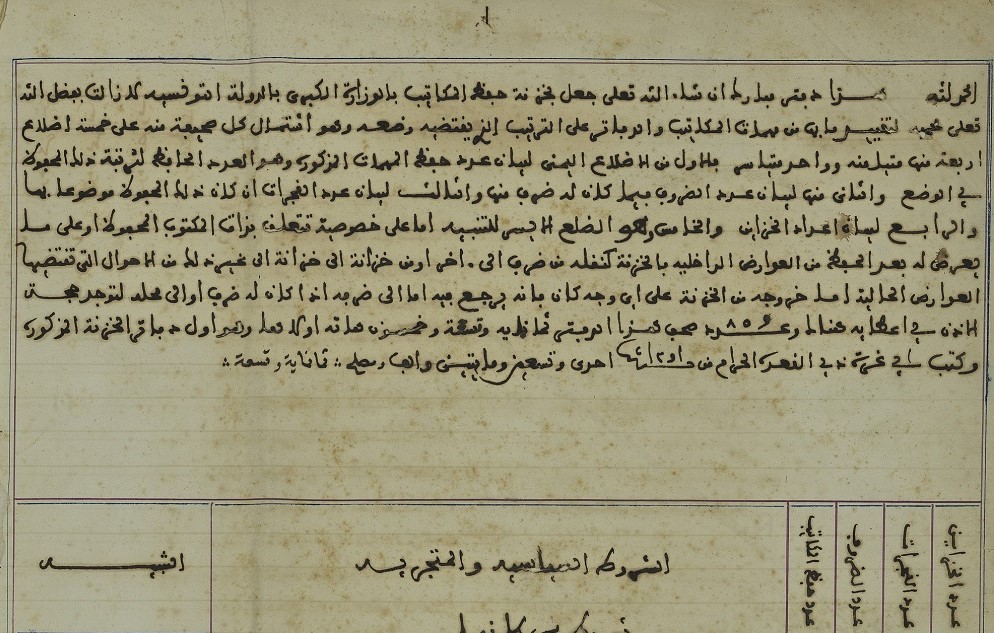
Les Archives nationales de Tunisie mettent à votre disposition ce site pour faire connaître ses activités et ses fonds et en faciliter l’accès au grand public. Nous souhaitons que notre site réponde bien à vos attentes et nous restons à votre disposition pour toute demande de renseignements supplémentaires ou suggestion de votre part.Les Archives nationales ont pour mission de prendre en charge le système national de gestion de documents et d’archives. Placée sous la tutelle du Premier ministère, cette institution œuvre avec les services de gestion de documents et d’archives aux ministères et dans les autres administrations publiques à la bonne utilisation des documents depuis leur création et à travers les étapes de leur cycle de vie. Elle gère les documents destinés à la conservation permanente et organise leur communication au public du fait qu’ils constituent une source pour la recherche scientifique et une partie intégrante du patrimoine national. Mission et attributions des Archives nationales Les Archives nationales ont pour mission : d’œuvrer à la sauvegarde du patrimoine archivistique national ; de veiller à la constitution, à la conservation, à l’organisation et l’utilisation de tous les fonds d’archives des services relevant de l’Etat, des collectivités locales, des établissements et des entreprises publics, des organismes privés chargés de la gestion d’un service public et des officiers publics ; collecter, conserver et communiquer les sources archivistiques se rapportant à la Tunisie et se trouvant à l’étranger. A cet effet, les Archives nationales exercent les attributions suivantes : fournir aux services et organismes sus-mentionnés l’assistance technique en matière d’archives ; faciliter l’élaboration des programmes de gestion de documents pour les dits services et organismes et approuver leurs calendriers de conservation ; contrôler les conditions de conservation des archives courantes et des archives intermédiaires des dits services et organismes ; assurer la collecte, la conservation, le traitement et la communication des archives définitives de ces mêmes services et organismes ; tablir et publier les instruments de recherche facilitant l’accès des utilisateurs aux archives ; organiser la communication des archives et promouvoir leur valeur culturelle et éducative par tous les moyens appropriés ; préserver les fonds d’archives qu’elles conservent ; promouvoir le domaine des archives par la recherche scientifique, la formation professionnelle et la coopération internationale. Pour accomplir sa mission et ses attributions, les Archives nationales ont été organisées par le décret n°97-389 du 21 février 1997 selon cet organigramme. Aperçu historique sur les Archives nationales C’est une entreprise difficile qu’essayer de cerner ce qu’avait pu être l’histoire des archives en Tunisie. C’est que les sources disponibles sur la question sont rares. Mais, nous sommes en état de dire que la plupart des régimes politiques qui se sont succédé dans l’histoire plus que deux fois millénaire de ce pays ont constitué d’importants fonds d’archives. Seulement, la majorité de ces fonds ne nous est pas parvenue à cause de la fréquence des guerres et de l’instabilité politique notamment avant l’avènement de la dynastie husseynite en 1705. La deuxième moitié du XIXe siècle s’est distinguée par la réalisation d’un ensemble de réformes ayant touché l’organisation politique (le pacte fondamental de 1857 et la constitution de 1861) et l’organisation administrative (fixation des missions des ministères et de leur organisation en 1860). C’est dans ce contexte que fut créé en 1874 un service au Grand ministère pour s’occuper des archives. Ce service appelé "centre des correspondances de l’Etat" a pour siège le "Dar El Bey" avec le reste des services du Grand ministère. Ce service s’est attaché à rassembler les documents publics en les transférant du palais du Bardo et en les collectant auprès des hauts fonctionnaires et des dignitaires de l’Etat. Ces documents ont été organisés suivant des méthodes techniques élaborées ayant même concerné l’organisation de la communication des documents et leur restitution. Ce service a bénéficié de moyens humains importants sous la direction du Cheikh Mohamed Taîeb BOUSSIN. Ainsi, la Tunisie était un pays précurseur dans ce domaine par rapport aux pays arabes, elle a été le deuxième pays après l’Egypte à avoir organisé ses archives et ce, avant l’établissement du protectorat français. Pendant la période du protectorat français (1881 - 1956) la situation est devenue complexe : l’administration tunisienne a été maintenue mais ses attributions furent réduites aux domaines liés directement à la population tunisienne (l’administration régionale et locale, la justice, le culte, les habous…) en plus elle est contrôlée par un haut fonctionnaire français : le Secrétaire général du gouvernement. D’autre part, des Directions techniques, faisant fonction de véritables ministères, ont été créées et relevaient directement du Résident général représentant de la France en Tunisie qui cumule les postes du ministre de la Guerre et du ministre des Affaires étrangères. Les documents générés par les activités de ces deux entités ont été organisés d’une manière différente. Pour l’administration tunisienne, ou la "Section d’Etat", le système mis en place s’inspire de celui des "bureaux d’ordre" en usage au ministère des Affaires étrangères en France (vu que la Tunisie, en tant que protectorat, relevait de ce ministère). Les documents des différents services ont été groupés en ensembles obéissant à un système de classification établi au préalable. Des bureaux pour les archives ont été institués dans les différentes structures de la Section d’Etat pour rassembler les documents et les dossiers courants. Depuis 1883 le "Centre des correspondances de l’Etat" est devenu : "Les Archives générales du gouvernement" et se transforme en dépositaire des documents de la Section d’Etat après la fin de leur utilité administrative. Ce service était rattaché au Secrétaire général du gouvernement. Plusieurs hauts fonctionnaires se sont succédé à la tête de ce service comme Chokri Ghanem, Mohamed Karoui (de 1887 à 1923), Hassen Hosni Abdelwaheb, Tahar Lajmi, Larbi Ben Abdallah, Ali Abdelwahab, Mohamed Salah Mzali et Mohamed Laziz Lakhoua. Les Archives nationales conservent actuellement la majorité des documents rassemblés par la "Section d’Etat". En ce qui concerne les documents générés par les Directions techniques, ils n’ont pas subi la même méthode d’organisation et n’ont pas été versés aux Archives générales du gouvernement mais sont restés dans les Directions et sont perdus (il n’en reste que très peu), tandis que les documents rassemblés par les services du Résident général français en Tunisie ont été transférés en France (ils relèvent du ministère français des Affaires étrangères). Depuis 1983, la Tunisie procède au microfilmage de ces documents. Avec l’autonomie interne de la Tunisie en 1955, les services de la Présidence du Conseil ont été réorganisés (décret en date du 13 octobre 1955) et les Archives générales du gouvernement ont pris le nom de "Archives générales". En 1967, le Secrétariat d’Etat à la Présidence a connu une nouvelle structuration et l’administration des archives est devenue : Division des Archives générales et de la Documentation. Elle est chargée de la centralisation et de la conservation des archives générales de l’Etat. Elle procède à l’établissement d’un répertoire général des archives de l’Etat et à sa mise à la disposition des chercheurs en vue de son exploitation. Une division est un organisme situé entre une sous-direction et un service. Ensuite, avec la création du Premier ministère et l’organisation de ses services (décret n°70- 118 du 11 avril 1970) l’ancienne dénomination de l’administration des archives change pour devenir : "Division des Archives générales". Enfin, en 1971 les services du Premier ministère ont été réorganisés, l’administration des archives est promue au rang de sous-direction en gardant la même dénomination. Il n’a pas été possible au jeune Etat tunisien issu de l’indépendance de poursuivre l’organisation des archives selon la manière suivie par la "Section d’Etat". Ainsi la fonction d’archivage commence à disparaître des administrations publiques et le versement des documents aux Archives générales s’est arrêté. Le rôle de cette institution s’est confiné à la communication des documents conservés aux utilisateurs. Entre temps, les documents se sont accumulés dans les services publics et les responsables ont commencé à réfléchir à cette question jusqu’à la parution de la loi n° 88-95 du 02 août 1988 relative aux archives en vertu de laquelle est institué l'établissement public nommé les Archives nationales. Les Archives nationales sont un établissement public à caractère administratif jouissant de la personnalité civile et de l’autonomie financière et relevant de la tutelle du Premier ministère. Depuis le début de 1999 les services des Archives nationales sont transférés du Premier ministère au nouveau siège sis au 122, boulevard du 9 Avril 1938 à Tunis. The mission of the National Archives is to take in charge and ensure a good running of the national system of records management. Under the tutelage of the Prime Ministry, this institution works in collaboration with the various ministries and public administrations records management services. Its aim is to guarantee an upright use of records throughout their whole life cycle. It wisely manages the records destined for permanent preservation, and organises their communciation to the public as they represent a valuable source for scientific research and an integral part of the national heritage. Mission and mandates of the National Archives The National Archives has as a mission to : safeguard the national archival heritage ; watch over the making, preservation, organisation and proper use of all archival fonds related to the state, local organisations, institutions and public enterprises, and private bodies responsible for the administration of a public service and civil servants ; collect, preserve and communicate all archival sources available abroad and thought relevant to Tunisia. The National Archives undertakes, then, the following tasks : providing the above-mentioned services and bodies with technical assistance in archival matters ; facilitating the elaboration of records management schemes for these same services and bodies and approve of their records schedules ; controlling the preservation condition of current and semi-current records of the above-mentioned services and bodies ; ensuring the collection, preservation, processing and communication of archives of these services and bodies setting up and publishing the various finding aids facilitating users’ access to records ; organizing the communication of records and promoting their cultural and educative value by all appropriate means ; preserving the conserved archival fonds ; promoting the archival field by means of scientific research, professional training and international co-operation. To better accomplish its mission and duties, the National Archives was organized by Decree n° 97 – 389, February 1997, and according to the following organization charte. The National Archives : historical overview Trying to formulate a clear idea about the history of archives in Tunisia is obviously hard. Available sources are, indeed, rare. It is, nonetheless, possible to claim that the greatest number of the successive political regimes which marked the history of this country for more than two thousand years formed important archival fonds. Unfortunately, however, we are not in reach of the major part of these fonds. Frequent wars and political instability, especially prior to the advent of the Husseynite Dynasty in 1705, were major causes in this sense. The second half of the XIXth century was marked by the accomplishment of a whole series of reforms which affected both the political organisation of the country (the Fundamental Pact of 1857 and the Constitution of 1861), and the administrative system of it (the determination of ministries’ missions and organisation in 1860). It is within this context that the Great Ministry “Prime Ministry” witnessed the creation, in 1874, of a service whose main task was to look after records. Known as the « Centre des correspondences de l’Etat » (State Correspondence Centre), this service had, with the other “Great Ministry’s services”, Dar El Bey, as headquarters. This service soon undertook the gathering of public records by transferring them from the Bardo Palace and collecting them from various other sources namely senior civil servants and statesmen. The organisation of these records was carried out according to elaborate technical methods. Such methods took into consideration the organisation and communication of these records and their restitution. Directed by Cheikh Mohamed Taib Boussin, this service benefited from the use of several valuable manpower resources. Hence, Tunisia, and compared to other Arab countries, was a precursor in this field. It was the second country, after Egypt, to opt for the organisation of its records, and this even before the establishment of the French Protectorate. The situation turned into complexity during the Protectorate Period (1881-1956). The Tunisian administration was maintained. However, its functions were restricted to fields of action directly linked with the Tunisian population (regional and local administration, justice, cult, habous “endowments”…). Besides, it was subject to the supervision of a French senior official, « Secrétaire général du gouvernement » (Secretary General of Government). This period witnessed also the foundation of some technical directorates playing the role of real state departments. They were under the direct supervision of the « Resident general » ( High Commissioner ), France’s representative in Tunisia, who jointly ran the affairs of the Ministry of War and the Ministry of Foreign Affairs. Records generated by the activities of these two entities were organised differently. As for the Tunisian administration, “Section d’Etat”, the implemented system was much affected by the registries system used by the French Ministry of Foreign Affairs (as a protectorate, Tunisia was among its mandates ). The records generated by the different services were grouped into series following a classification system set in advance. Records offices were established within the various structures of the Section d’Etat. Their main task was the collection of current records and files. In 1883, and from there on, the “Centre des correspondences de l’Etat” became known as « Les Archives générales du gouvernement » (State General Archives) and turned into a depository for the « Section d’Etat » records which lost administrative value and importance. This service was attached to the Secretary General of Government. Several senior civil servants presided over this service, namely Chokri Ghanem, Mohamed Karoui (1887-1923), Hassen Hosni Abdelwaheb, Tahar Lajmi, Larbi Ben Abdallah, Ali Abdelwaheb, Mohamed Salah Mzali and Mohamed Laziz Lakhoua. The National Archives presently undertakes the preservation of the major part of these records. The records generated by the technical directorates were not arranged in the same way, however. They were not transferred to the State General Archives either. They were kept at the directorates, which led to their loss except some. As for the records collected by the services relevant to the French « Resident general » in Tunisia, they were transferred to France (They belong to the French Ministry of Foreign Affairs). Since 1983, Tunisia has actively proceeded to the microfilming of these records. With Tunisia’s political autonomy in 1955, services of « the Presidence du Conseil » (Council’s Presidency) were reorganised (Decree of October 13, 1955), and the General State Archives took the name of “Archives générales” (General/Central Archives). In 1967, the Presidency State Secretariat underwent a whole restructuring, and the archives administration became known as the « Division des Archives générales et de la Documentation » (Division of General Archives and Documentation). It had as a task the centralization and preservation of the State’s general archives. It soon undertook to establish a full list of the state’s records and to make them accessible to researchers. Administratively, a division is a body which ranks in the middle between a sub-directorate and a service. The establishment of the Prime Ministry and the organisation of its services, following Decree n° 70-118 of April 11, 1970 caused the archives administration to be renamed as the “Department (Division) of General Archives”. It was in 1971, following the reorganisation of the Prime Ministry’s services, that the archives administration got promoted to the ranks of a sub-directorate keeping The same denomination. It was not possible for the newly-born Tunisian state to pursue the organisation of its records using the State Section’s method. Archival activity and processing began, then, to disappear from public administrations, and records transfer came to a halt. The role of this institution was confined to the communication of preserved records to the users. Meanwhile, records accumulated within public services, which necessitated a deep meditation about the question. This ended in the establishment of the National Archives as a public institution in accordance with the stipulations of Act n° 88-95 issued on 2 August 1988. Under the tutelage of the Prime Ministry, the National Archives is a public institution which, in addition to its administrative character, enjoys the status of civil person and financial autonomy. Since the beginning of 1999, the National Archives services were transferred from the Prime Ministry to their new headquarters located at 122, Boulevard 9 avril 1938 in Tunis. |
|